

There is a reason some homes feel finished within minutes of walking in, while others feel like a sequence of nice purchases that never quite became a room. The difference is rarely budget. It is a small number of decisions that designers make almost reflexively and amateurs rarely make at all.
This guide is the short version of those decisions — useful whether you are styling a single shelf or planning a whole apartment.
Decision 1: Decide the temperature of the room
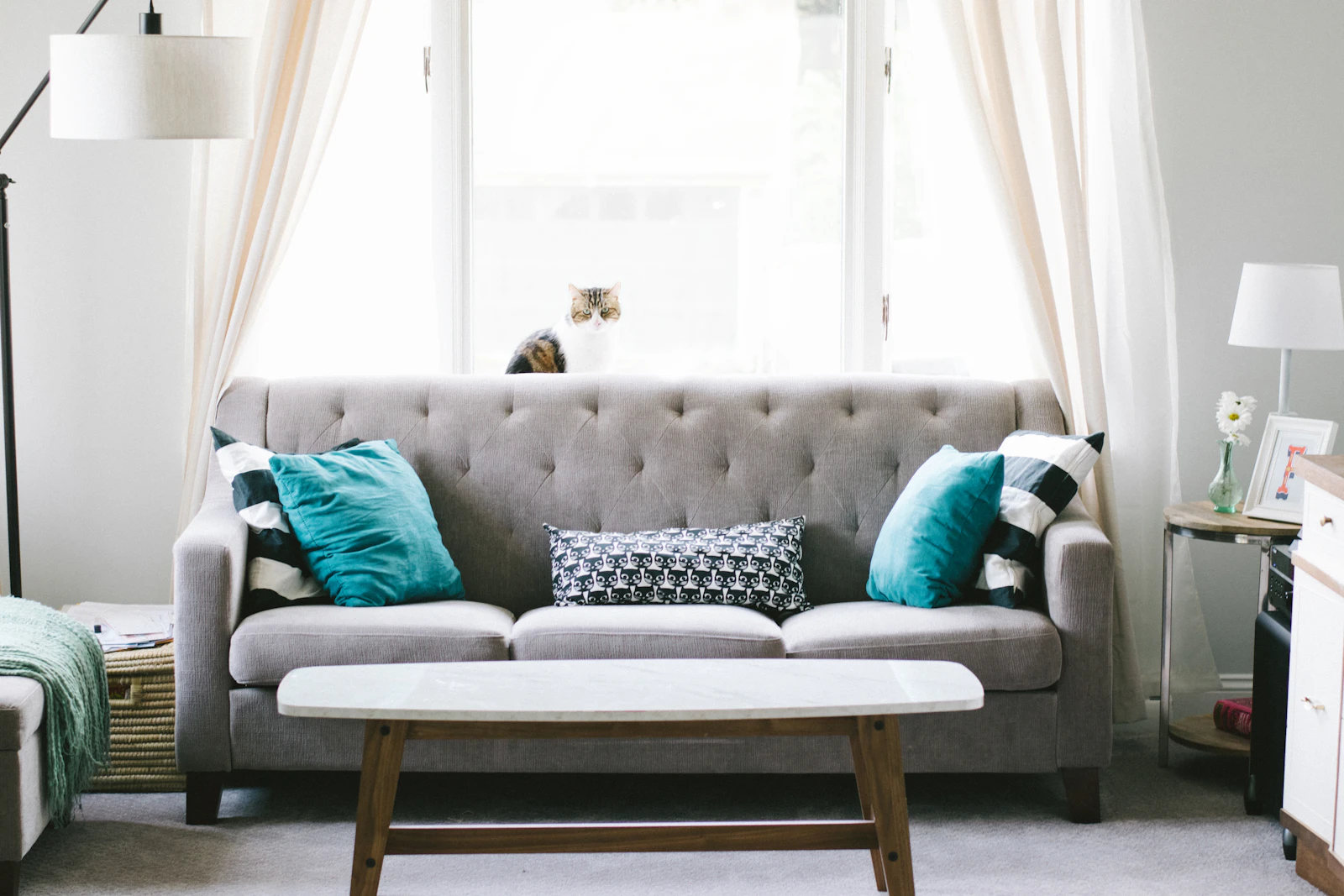
Every room has a temperature — warm, cool, or neutral — set by its largest surfaces. Warm rooms lean toward oak, walnut, clay, brass, soft whites, and undyed linen. Cool rooms lean toward grey-stained wood, blackened steel, slate, ink, and crisp whites.
There is no right answer, but mixing temperatures without a deliberate reason is the single most common cause of a room that feels off. If the floor is warm-toned and the sofa is cool-toned, every later decision will feel like a compromise.
Decision 2: Get proportion right before style
A modern room with the wrong proportions will always feel slightly wrong, no matter how beautiful the individual pieces are. Two simple proportional rules cover most situations:
- Sofa to wall: the sofa should be roughly two-thirds the length of the wall behind it. Smaller looks lost; larger looks stuffed in.
- Coffee table to sofa: the coffee table should be roughly two-thirds the length of the sofa, and around 4cm lower than the seat cushion.
- Rug under furniture: at least the front legs of every major piece of furniture should sit on the rug. A rug that floats in the middle of the room shrinks the whole space.
- Pendant over a dining table: bottom of the pendant 75–80cm above the table top, regardless of ceiling height.
Decision 3: Layer texture before adding color
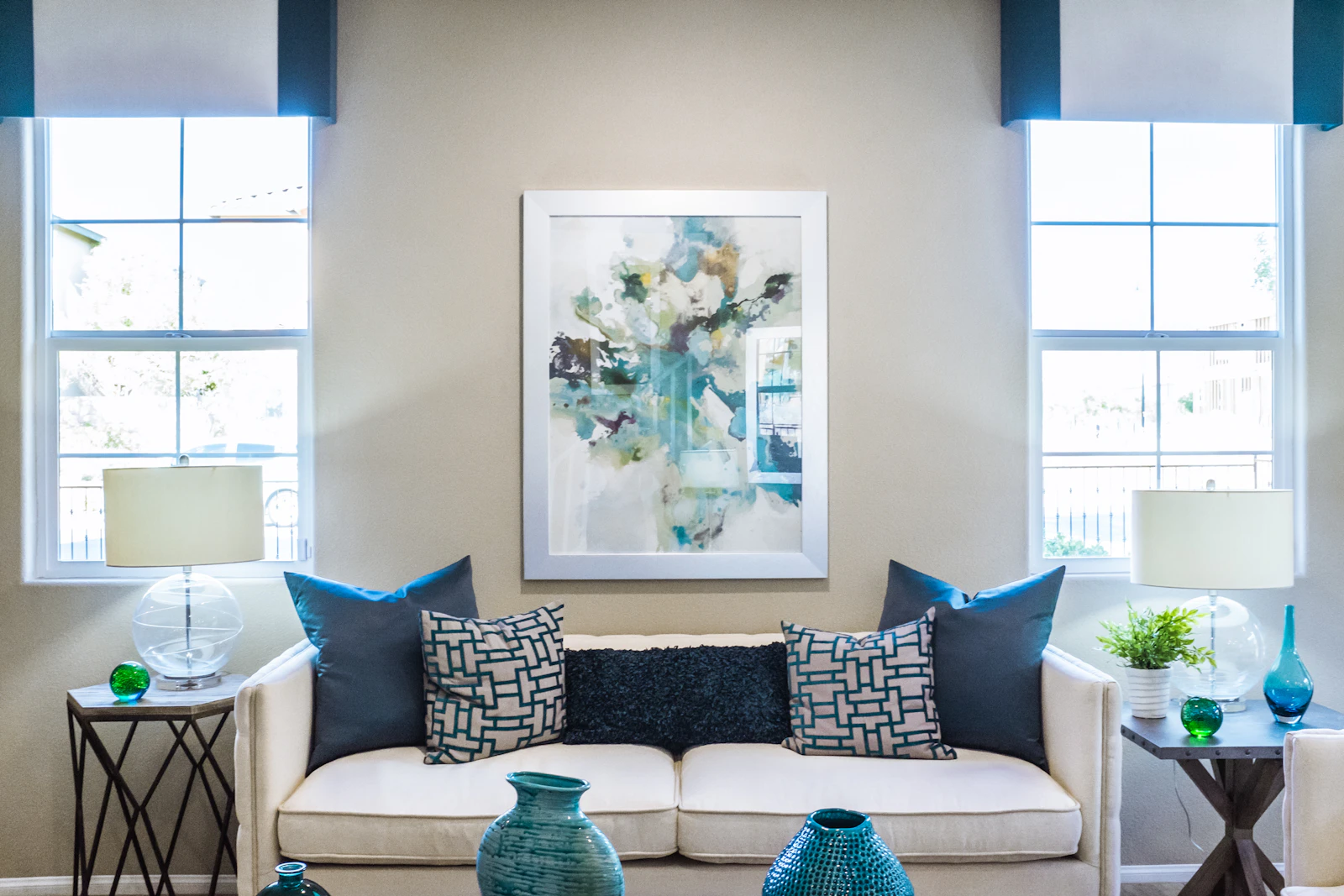
Modern interiors photograph well in neutrals because neutrals reveal texture. Polished stone next to washed linen next to oiled oak gives a room depth without a single bright color. Add color, and the eye stops noticing the textures; the room flattens.
If a neutral room feels boring, almost always the answer is more texture, not more color. Try one of these layered into an existing scheme:
- A heavy linen curtain in a slightly different off-white than the wall.
- A wool boucle cushion against a smooth leather sofa.
- An unfinished oak side table next to a polished stone surface.
- A hand-thrown stoneware lamp base under a paper or linen shade.
Decision 4: Layer lighting properly
Almost every room that looks great in a magazine has at least three light sources turned on, none of them on the ceiling. The single overhead light is the lighting equivalent of a fluorescent strip in an office.
A working lighting plan for a living room or bedroom usually includes:
- One ambient source — a floor lamp, ideally with a fabric or paper shade.
- One task source — a table lamp by a sofa or bed, at reading height.
- One accent source — a wall sconce, a picture light, or a low candle for evenings.
- Dimmers — on every fixed light. They cost very little and change the room twice a day.

Decision 5: Edit ruthlessly, then add one personal object
The defining habit of a designed room is the willingness to remove. Three objects beautifully placed look more intentional than nine of equal quality crowded together.
Once a room is restrained enough to read clearly, deliberately add one object that breaks the rules — an old book, a piece of inherited ceramic, a rough piece of driftwood, an unframed photograph. That single imperfect object is what stops the room from looking like a showroom.
Mistakes that flatten a modern room
- Matching everything. A sofa, two side tables, and a coffee table from the same range removes any sense of evolution.
- One huge feature wall in a different paint color — usually overwhelms the rest of the room.
- Symmetry everywhere. Some symmetry is restful; total symmetry reads as a hotel lobby.
- Buying art last and small. Art is structural, not decorative. One large piece, chosen early, anchors a room.
- Rugs that are too small. The single most common proportional mistake; almost always go one size up from your instinct.
A simple sequence for any room
If you are starting from scratch or resetting a room, this order works almost universally:
- 1. Decide the temperature (warm/cool/neutral).
- 2. Choose the floor finish or rug.
- 3. Choose the largest piece of furniture (sofa, bed, or dining table).
- 4. Decide the lighting plan before buying lamps.
- 5. Add textiles — curtains, throw, cushions — in two or three textures, one tone family.
- 6. Add one large piece of art.
- 7. Style with three to five small objects, with empty space between them.
- 8. Live in the room for two weeks before adding anything else.
Furnish a room that feels designed, not decorated
Discover considered pieces in honest materials — built for proportion, made for daily life.
Explore the collectionFrequently asked questions
Do I need to commit to one design style?
No. The most timeless modern interiors mix periods and styles freely. The discipline is consistency of quality and temperature, not consistency of style.
How much should I spend on art?
Less than people think on the piece, more than people think on the size. A large affordable print, well framed, almost always beats a small expensive original in a modern room.
What's the fastest single upgrade for a tired room?
Change the lighting. Two well-placed warm-white lamps and a dimmer transform a room more than any new piece of furniture.
How often should I redecorate?
Rarely. A well-designed modern room should evolve through one or two new objects per year, not full redecorations every season.
Continue reading